
Case files and field notes from inside real organizations.
Short-form observations


The Stated Problem
Why the first explanation is almost never the real one.
The first meeting ended in eleven minutes. The answer was no before the question was fully asked.
On paper, nothing about the request should have been controversial.
A growing organization wanted to expand advertising support for a customer program. Ownership appeared clear. The organizational chart identified the responsible teams, leadership supported the initiative, and the customer need was well understood. Yet every attempt to move the work forward ended with the same response:
"We can't support that."
The explanations sounded reasonable. Capacity was limited. Legal review would be difficult. Existing priorities took precedence. None of those statements were false.
But none of them fully explained why progress had stopped.
Something beneath the visible organization was determining the outcome.
The stated problem is rarely the operating problem.
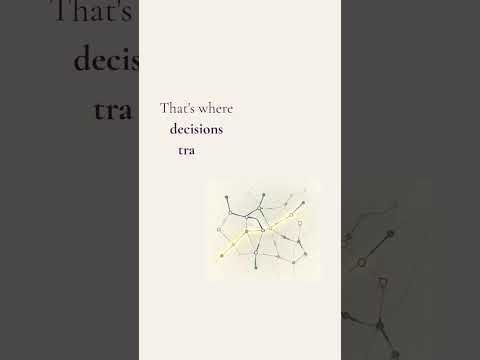
The Invisible Map
As discovery conversations expanded beyond the immediate stakeholders, a different picture began to emerge.
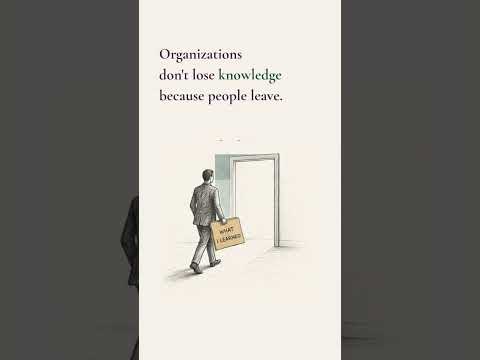
Historical knowledge had not disappeared — it had simply moved.
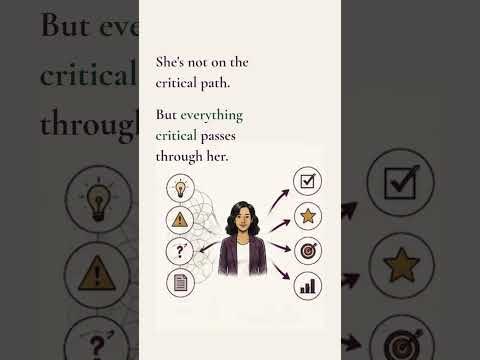
A former manager who had built the original program still carried nearly a decade of institutional context. Customer success teams had developed workarounds nobody talked about openly. Individuals who no longer officially owned the work were still the people everyone called when something broke.
The organization had quietly redistributed knowledge without redistributing responsibility.
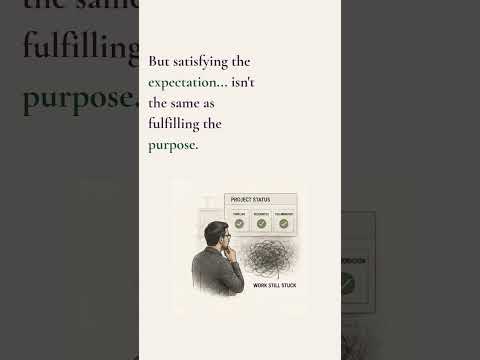
At the same time, the teams responsible for current execution were protecting legitimate concerns that had never been stated directly. Legal exposure, compensation structure, and operational velocity influenced nearly every decision — even though none of those constraints appeared in project documentation or meeting notes.
The resistance wasn't arbitrary. It was rational.
Organizations protect more than processes. They protect incentives.
The Turning Point
The shift didn't come from a breakthrough conversation.
It came from a different question.
Instead of asking how to persuade another team to participate, the focus shifted toward understanding what had to remain true for that team to participate safely.
That single reframe changed everything.
Resistance stopped looking like obstruction and started looking like information.
Once those incentives became visible, the invisible map became navigable.
What Discovery Made Possible
The solution wasn't a single meeting or a change in ownership.
New operating mechanisms were built around the constraints discovery had uncovered. Tools were developed internally and reviewed by subject matter experts, turning the resistant team's expertise from a barrier into a requirement. Historical knowledge was reconstructed from multiple sources. Parallel support paths reduced dependence on a single stakeholder group while preserving the expertise that already existed.
Within sixty days, tools were live, sellers had access to support they previously couldn't reach, and the organization had a documented operating path that no longer depended on a single team's cooperation.
The relationships remained challenging. But the work was moving again.
More importantly, the organization now understood why it had stopped in the first place.
Discovery doesn't begin when you find the answer. It begins when you realize you've been asking the wrong question.
Discovery hadn't solved a technical problem. It had revealed an organizational one.
When an organization tells you, "We can't," treat it as the beginning of the investigation — not the end of the conversation.
The invisible map is always there. The question is whether you know how to read it.
Coming soon.